
By Mark J. Burger, CPA · BalancedWealthStrategies.com · As of October 2026
Section 1202 can exclude a large share of the gain on a business sale from federal tax, but only for stock that meets a specific definition: a domestic C-corporation, acquired at original issuance, from a company under the gross-assets ceiling ($75 million for stock issued after July 4, 2025), engaged in an active qualified business, held long enough, and not redeemed around issuance. This is a screen, not a determination, but it tells an owner whether the question is worth pursuing.
Section 1202 can exclude a large share of the gain on a business sale from federal tax, but only for stock that meets a specific definition. The tests below are the ones that most often decide whether stock qualifies. None is a substitute for a formal analysis, and eligibility is genuinely fact-specific, but knowing what the code is looking for tells an owner whether the question is worth pursuing. It pairs with our anchor article on qualified small business stock after the 2025 expansion.
A C-Corporation, at Issuance and Throughout
The stock must be that of a domestic C-corporation. Stock of an S-corporation, a partnership, or a limited liability company does not qualify. The corporation must generally remain a C-corporation during substantially all of the shareholder’s holding period, which is why a later conversion does not retroactively cure earlier years.
Acquired at Original Issuance
The shareholder must have acquired the stock at its original issuance, from the company, in exchange for money, property, or services, rather than by buying it from another shareholder. Founders’ shares, and stock acquired in a qualifying financing round, are the typical cases; shares purchased on a secondary basis usually are not.
A Small Enough Company, an Active Business, and a Long Enough Hold
At the time the stock was issued, the corporation’s aggregate gross assets must have been at or below the statutory ceiling, raised to $75 million for stock issued after July 4, 2025, from $50 million previously, and indexed after 2026. A company that has since grown far larger can still have issued qualifying stock, because the test is applied at issuance. Broadly, at least 80 percent of the corporation’s assets must be used in the active conduct of a qualified trade or business, and a number of fields are specifically excluded, including many professional service businesses such as health, law, accounting, consulting, and financial and brokerage services, as well as farming, certain hospitality, and businesses whose principal asset is the reputation or skill of an employee. Manufacturing, technology, and many product businesses commonly qualify; service firms often do not. For stock issued after July 4, 2025, the exclusion is 50 percent at a three-year hold, 75 percent at four years, and 100 percent at five; stock issued earlier requires more than five years. Anti-abuse rules can also disqualify stock if the corporation redeemed shares from the holder or related parties near issuance, a technical trap that is easy to trigger inadvertently.
Worked example (illustrative). A founder’s company had $40 million of gross assets when her stock was issued in 2026, under the $75 million ceiling, and it is a product-technology business, so the active-business test is met. She acquired the shares directly from the company at formation, satisfying original issuance, and no shares were redeemed near issuance. If she holds five years and later sells at a $9 million gain, the whole gain can fall within the exclusion; at a combined 23.8 percent rate, that is roughly $2.14 million of federal tax avoided. Had the company instead been an accounting or consulting firm, the active-business test would have failed at the door, and none of the tests that follow would matter. Figures are illustrative, ignore state tax, and depend on the reader’s own facts.
Learn More
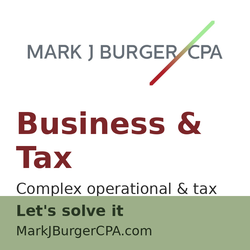
The Six Tests at a Glance
| Test | Qualifies | Disqualifies |
|---|---|---|
| Entity | Domestic C-corporation | S-corp, partnership, or LLC |
| How acquired | Original issuance from the company | Bought from another shareholder |
| Company size at issuance | Gross assets at or below $75M | Above the ceiling when issued |
| Business activity | Active qualified trade (80% of assets) | Excluded service/financial fields |
| Holding period | 3, 4, or 5 years (post-7/4/2025 tiers) | Sold too early for any tier |
| Redemptions | None near issuance | Buybacks from holder or related parties |
How to Confirm Where You Stand
- Identify the entity and its history. Confirm the corporation was a domestic C-corporation when the stock was issued and has stayed one.
- Trace how you got the shares. Verify original issuance from the company, not a secondary purchase.
- Pin the gross assets at issuance. Find the balance sheet as of the issuance date and confirm it was under the ceiling.
- Classify the business. Determine whether the active-business test is met and the company is not in an excluded field.
- Check the clock and the redemptions. Confirm the holding-period tier and that no disqualifying redemptions occurred near issuance, then confirm current figures with counsel — our wealth management and financial planning services can coordinate this alongside your tax and legal advisors.
Case in point (illustrative). An owner assumed her stock did not qualify because the company had grown to $120 million in assets, well over the ceiling. On review, the gross-assets test is measured at issuance, and when her shares were issued the company held about $30 million, under the then-$50 million limit. The stock qualified after all; a sale excluded the gain within the cap. The disqualifying assumption would have cost a seven-figure benefit. The scenario is anonymized and illustrative and describes no identifiable client.
QSBS eligibility is one piece of a larger sale decision. See our financial roadmap for before and after a business sale for the fuller picture.
If your stock might qualify, or you want to know before a sale is on the table, an independent, CPA-led review can tell you where you stand. Schedule a confidential consultation with Mark J. Burger, CPA →
Frequently Asked Questions
If my company grew past the asset limit, did I lose the benefit?
Not necessarily. The gross-assets test is measured at the time the stock was issued. A company that was under the ceiling then, and has grown well beyond it since, may still have issued qualifying stock. The issuance-date facts control.
My company is a service business. Can it ever qualify?
Many service fields are excluded, particularly professional and financial services. Whether a specific business falls inside or outside the exclusion can be nuanced, and it is one of the first questions to resolve, because it can be decisive.
How do I actually confirm eligibility?
With a formal analysis of the corporation’s history, its form, its assets at issuance, its activities, and any redemptions, usually performed with your tax advisor and corporate counsel. This companion is a screen, not a determination.
Does converting my LLC to a C-corporation start the clock today?
Generally the qualifying holding period begins when the C-corporation stock is issued, which for a converting business is typically at conversion. That is why a conversion done shortly before a sale usually captures little or no exclusion, and why the decision belongs years ahead of a contemplated sale rather than at the end.
Is this the same as the exclusion tiers in the anchor article?
Yes. This companion covers what makes stock eligible; the anchor covers how much gain the eligible stock can exclude and the 2025 changes to the tiers, the cap, and the gross-assets limit. Read together they give the full picture, and both point to the same conclusion: analyze it early.
Important Regulatory Disclosure
Balanced Wealth Strategies, LLC is a registered investment advisor. This is not an offer to sell securities or the solicitation of an offer to purchase securities. All investing involves risk, including the potential loss of principal. Past performance is not indicative of future results. Please see our Disclosures for Form ADV Part 2A and 2B for complete details about our services, fees and professional background.
Sources: definition of qualified small business stock under IRC section 1202: domestic C-corporation, original issuance, aggregate gross assets test, active-business (80%) requirement, and excluded fields. One Big Beautiful Bill Act: gross assets limit increased to $75 million and tiered holding-period exclusions (50/75/100%) for stock acquired after July 4, 2025; as summarized by Baker Tilly and Mintz, July 2025. Redemption anti-abuse rules under IRC section 1202(c)(3). The 23.8 percent rate in the worked example is the 2026 top long-term capital gains plus NIIT rate. Eligibility is fact-specific and should be confirmed with your tax advisor and corporate counsel before acting.